

THE NEW GEMSTONE ECONOMY
India’s luxury gemstone market is evolving beyond adornment, driven by investment-led buying, provenance-focused collecting, and a new generation of globally informed connoisseurs.
Photos by Rhea Poddar Loyalka, Founder, Creative Director, Deshya by Ma Passion

There is something almost mysterious about the way India has always understood gemstones- not merely as ornaments, but as language. A ruby gifted at a wedding speaks of protection, and an emerald worn at court once signalled diplomatic alliance. For centuries, the subcontinent sat at the crossroads of the world’s most coveted mineral trade, and today, in 2026, that relationship is being renegotiated in ways that are at once deeply traditional and startlingly modern.
The Indian gemstone market, for long a sleeping giant by contemporary luxury standards, has woken up. Industry analysts place the coloured gemstone sector on a compound annual growth trajectory of between 8 and 11 percent through the late 2020s — a figure driven not by nostalgia, but by a confluence of new money, shifting aesthetics, and a growing appetite among wealthy Indians to hold assets that are simultaneously beautiful and financially durable.
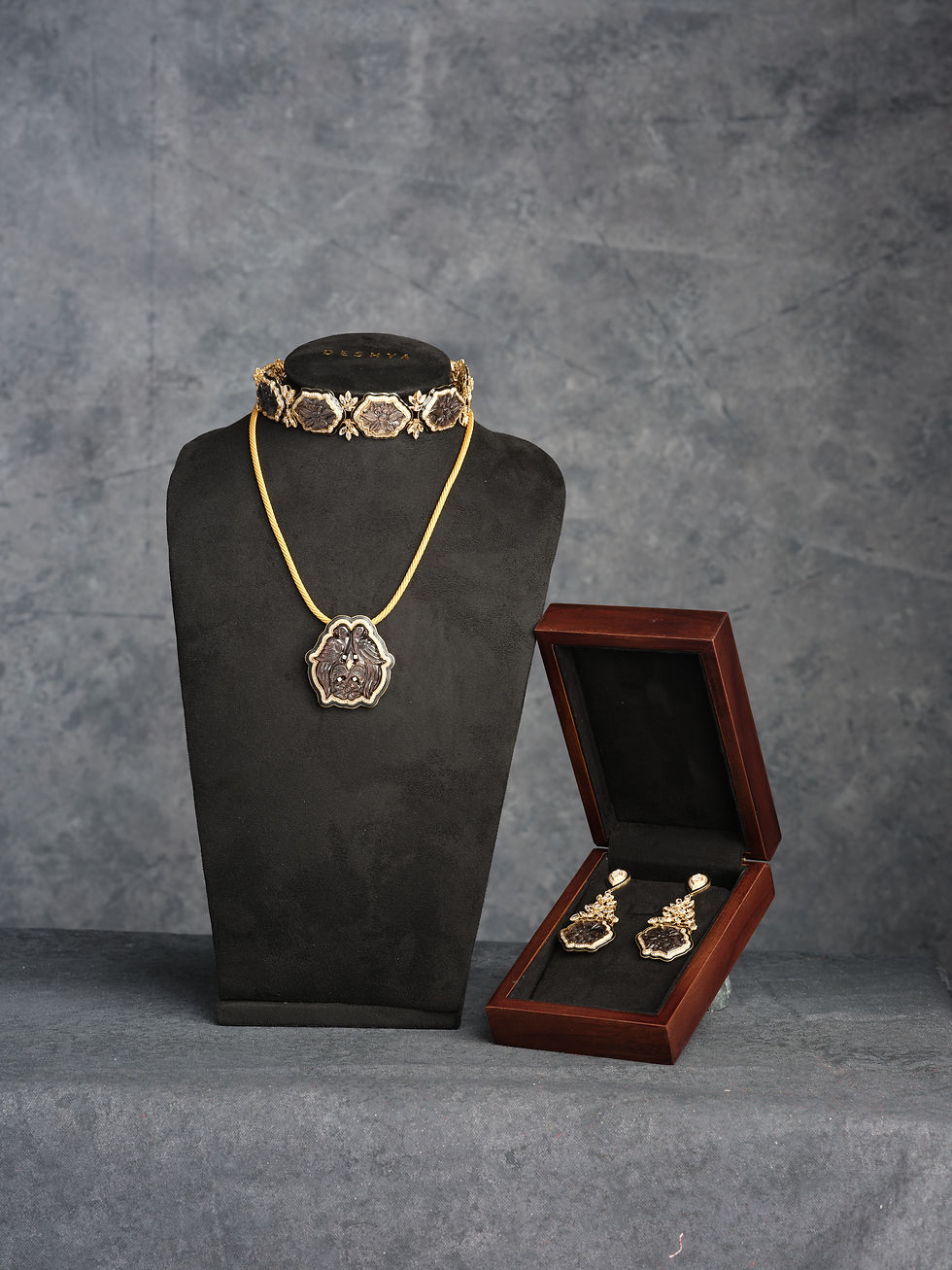
FROM ADORNMENT TO ASSET
What is changing, perhaps most fundamentally, is the investor’s mindset. For much of the twentieth century, gold dominated the Indian conception of wearable wealth-portable, liquidated easily and emotionally resonant. Gemstones occupied a subordinate role, prized within jewellery but rarely considered standalone stones of value. That calculus has begun to shift.
Amidst global economic instability and the thinning returns of traditional investments, a class of affluent Indian collectors, largely urban-dwelling, globally schooled, and open to alternative markets, has begun viewing rare gemstones through the same lens as the West, which is fine art or rare vintages. Significant unheated Burmese rubies, Colombian emeralds, and Kashmir sapphires have seen their values soar over the last ten years, with several examples commanding many times their initial prices at global auction houses.
This is not speculative fever. It is the belated alignment of India with a global conversation long underway in Geneva, Hong Kong and New York. What distinguishes the Indian iteration is its particular cultural texture. Buyers here are not purchasing abstracted commodities; they are purchasing stones with provenance, with story, with the expectation that the piece will one day be passed on.

The PROVENANCE IMPERATIVE
If recent years have established one thing clearly, it is that provenance has become non-negotiable in the upper tiers of the Indian market. Laboratories such as the Gübelin Gem Lab and GIA have long been respected globally, but their reports are now demanded as standard practice by discerning Indian collectors — not simply for resale assurance but as a mark of seriousness. Buying a significant sapphire without a credentialed origin report is increasingly seen as an act of recklessness.
This insistence on documentation has had a secondary effect: it has begun to flush poorly certified stones out of the premium tier. Independent gemological consultants, a vocation hardly acknowledged in India ten years back, currently run flourishing practices throughout Mumbai, Delhi and Bengaluru, assisting investors who understand exactly what they need and will never accept anything less.

THE 2026 AESTHETIC
Several under-currents are visible in the present market. There is a marked return to cabochon cuts, smooth, unfaceted stones with an archaic, almost talismanic quality appearing across both heritage Indian jewellery houses and younger independent designers. Collectors are shifting their focus to spinels. Once overlooked, these stones are now prized for their vivid pinks and blues, offering a rare high-clarity alternative to rubies at a far more budget-friendly price. Paraíba tourmalines are distinguished for their striking, neon blue-green shades and maintain their prestige by securing massive premiums. Simultaneously, Colombian emeralds are undergoing a subtle revival within Indian luxury jewellery, as their rich tones align perfectly with the country's historic design sensibilities.
LOOKING FORWARD
What emerges is a market in sophisticated transition. The Indian collector of 2026 is more informed, more demanding, and more internationally fluent than any previous generation. They want beauty, certainly, but they also want integrity, in sourcing, in certification, in the relationship between seller and buyer. The era of asymmetric information, in which a seller could rely on a buyer’s unfamiliarity, is closing. What opens in its place is something more interesting: a market defined by genuine connoisseurship, where the finest stones find their most deserving custodians. In that sense, at least India is returning to itself.

Comments